
Genshin Impact Chinese Origins and Developer Background
Is Genshin Impact Chinese? Discover how this globally beloved game by miHoYo blends Chinese roots with international appeal.
If you’ve been wondering is Genshin Impact Chinese, the quick answer is yes—it absolutely is. Genshin Impact was created by miHoYo, a game studio founded in Shanghai, China, back in 2012. Even though millions of players now jump into Teyvat from PC, PlayStation, mobile, and Xbox all over the world, the game’s development roots, studio identity, and core production pipeline all lead back to mainland China. Once you look at who made it, how it’s published, and how its cultural influences show up in-game, the answer becomes pretty clear.
Is Genshin Impact Chinese? Quick Answer
Yes, Genshin Impact is a Chinese-made game, but it’s also very much a global live-service title. miHoYo was founded in Shanghai by three Shanghai Jiao Tong University graduates—Cai Haoyu, Liu Wei, and Luo Yuhao—and the company was officially incorporated on 13 February 2012. When Genshin launched in September 2020 on PC, iOS, Android, and PlayStation 4, it did not roll out as a China-only release. It launched worldwide right out of the gate.
After Genshin Impact exploded in popularity, miHoYo introduced HoYoverse in February 2022 as its global publishing brand. Formally, that entity is Cognosphere Pte. Ltd., and it is based in Singapore. HoYoverse handles miHoYo’s international publishing work, including regional compliance, marketing, support, and other global-facing operations. On top of that, the company has offices in Montreal, Los Angeles, Tokyo, and Seoul, which gives it a much wider international footprint.
That distinction matters. If you’re asking is Genshin Impact Chinese as in “was it made in China,” the answer is yes. If you mean “is it only for China,” then no, not at all. The mainland Chinese version follows a different regulatory setup, but the global version is fully available across North America, Europe, Southeast Asia, and other regions. So yes, it is a Chinese game—but definitely not a China-exclusive one.
Genshin Impact Developer and Publisher Facts
miHoYo started small, building mobile games out of a university dorm setting before growing into a major studio through the Honkai series. Genshin Impact itself began taking shape after the open-world portion of Honkai Impact 3rd’s “Hachisakura” update pushed the team toward a much bigger idea. That eventually became Genshin, a project reportedly greenlit in early 2017. Its development and marketing budget landed around $100 million, which made it one of the most expensive game productions of its time.
By 2026, Genshin Impact is available across a huge range of platforms: PC (Windows), iOS, Android, PlayStation 4, PlayStation 5, Xbox Series X/S, which joined in November 2024, and HarmonyOS NEXT starting in September 2025. The game uses regional servers, with separate clusters for Asia, Europe, the Americas, and TW/HK/MO. One important detail here: your account is tied to the server where it was created, and progress does not transfer between servers. That’s a big deal if you’re deciding where to start.
| Entity | Role | Location |
|---|---|---|
| miHoYo Co., Ltd. | Developer, mainland China operations | Shanghai, China |
| HoYoverse (Cognosphere Pte. Ltd.) | Global publishing brand | Singapore |
| Regional offices | Marketing, localization, support | Los Angeles, Montreal, Tokyo, Seoul |
The global version runs through the HoYoverse account ecosystem, which covers login, top-ups, and cross-platform progression. Mainland China is different. Players there use a separate miHoYo account system, and that setup is tied to real-name verification rules required under Chinese gaming law.
Is Genshin Impact a Chinese Game in Content
The ownership side is straightforward, but content is where things get more interesting. In terms of design and cultural identity, Genshin absolutely carries Chinese influence—just not across every single part of the map in the same way. Teyvat is built as a multicultural fantasy world, and that’s a huge part of why it works so well globally.
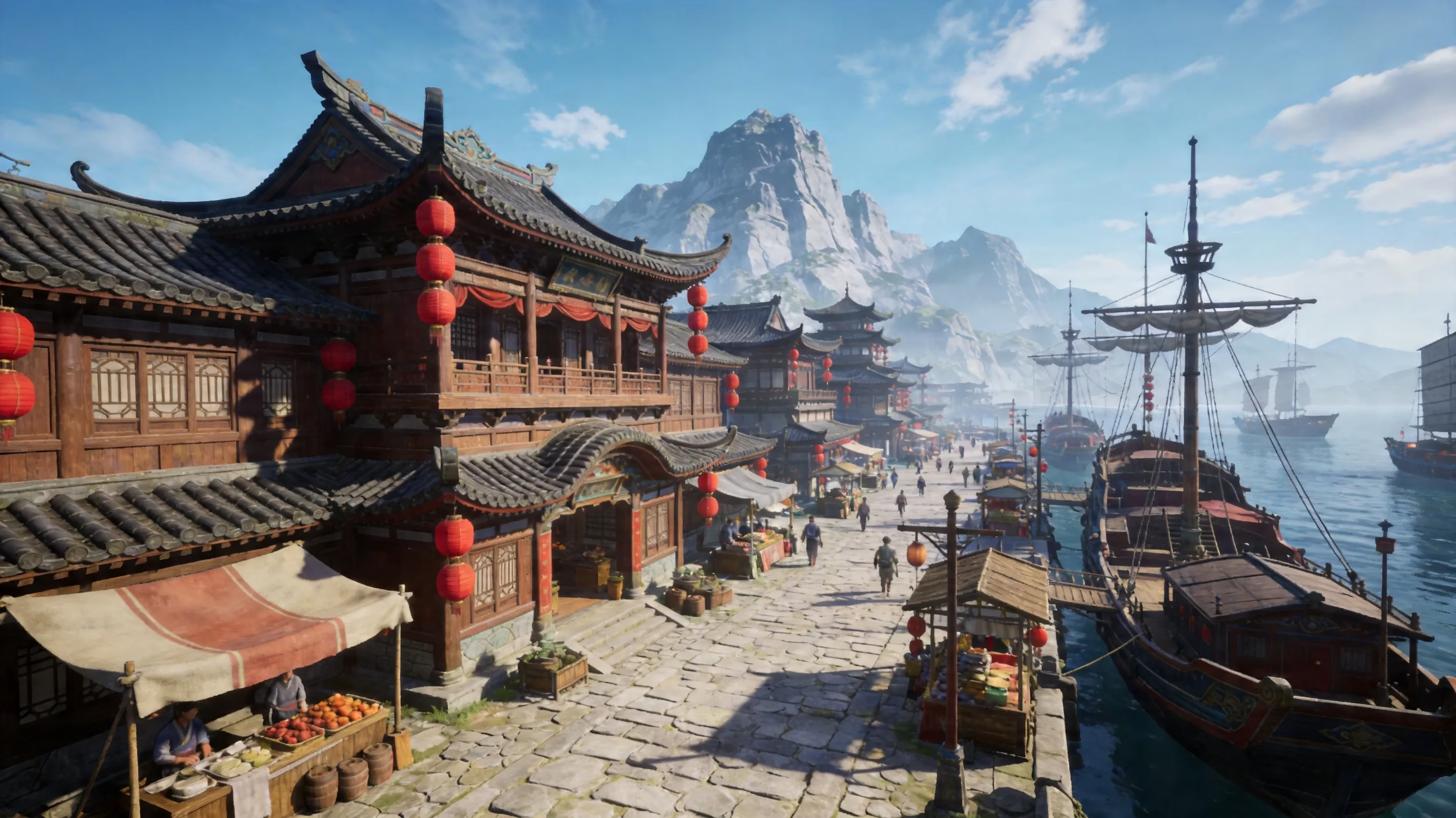
The clearest example is Liyue. This region is packed with Chinese cultural coding, from its harbor-city architecture and curved tiled rooftops to its jade-heavy palette and visual motifs that echo the Ming and Qing eras. Even its themes—contracts, commerce, stability, Geo—line up neatly with ideas often associated with Chinese philosophy and historical trade culture. Kotaku even called Liyue “one of the most exciting regions in games in years,” pointing specifically to how its quests and NPC interactions reflect an idealized version of Chinese social values.
Then there’s Lantern Rite, which has become one of the most recognizable seasonal events in live-service gaming. It clearly draws from the Chinese Lantern Festival and Lunar New Year traditions, with sky lanterns, festive foods, and stories centered on family, remembrance, and community. For a lot of global players, this event is more than just a patch highlight—it’s their first real interactive exposure to Chinese holiday customs.
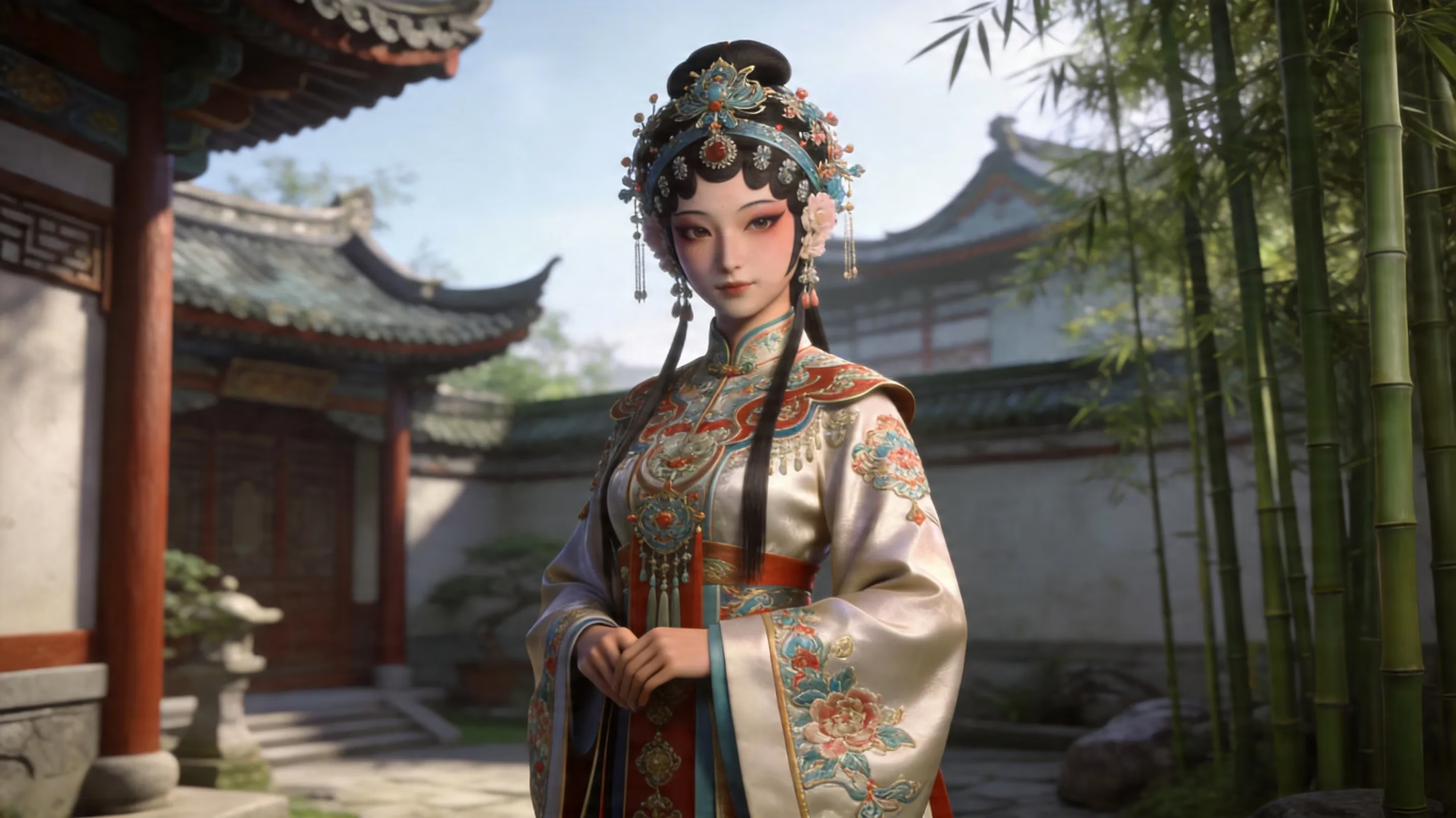
Yun Jin is another standout example. As the head of the Yun-Han Opera Troupe in Liyue, she is built directly around Chinese Peking opera influences. Her animations mirror stylized stage movement, and her Chinese voice actress, He Wenxiao, gives the role a performance texture that feels rooted in actual operatic tradition. Her story also touches on something very real: how traditional art forms survive by balancing preservation with adaptation. That theme lands especially well if you know anything about ongoing conversations around Chinese performing arts.
At the same time, Genshin doesn’t stop at Chinese inspiration. Mondstadt leans into medieval German city-state vibes, Inazuma pulls heavily from feudal Japan, Fontaine reflects France, Sumeru mixes Middle Eastern and South Asian influences, and Natlan takes cues from Mesoamerican cultures. So yes, Genshin is Chinese in origin and partly in content—but Teyvat itself is intentionally broader than that.
Genshin Impact Chinese Version vs Global Version
For players, one of the most useful distinctions is the gap between the mainland Chinese client and the global client. They are not just different server options. In practice, they operate as separate products under different rules.
The mainland China client, which miHoYo manages directly, requires real-name ID verification for account registration. That is tied to China’s Minor Protection Law and broader gaming regulations. Minors are subject to strict limits on both playtime and spending. This version uses Chinese server infrastructure, runs on a separate account system, and is distributed through channels such as the official miHoYo launcher, TapTap, Bilibili, and Xiaomi’s app store. One notable update: the Xiaomi server was shut down in January 2025, and player data was merged into miHoYo’s official servers.
The global client, handled by HoYoverse, does not require mandatory identity verification for adult players. It uses international payment systems and follows the content rating standards of each market. There have also been visual differences between mainland and global builds at times, especially around character outfit visibility, due to Chinese compliance requirements.
Cross-server transfer is not available. If you made your account on the Asia server and later moved to North America, your progress stays where it is. There’s no official migration system. Honestly, this is one of the more frustrating limitations for long-term players who relocate.
Top-up methods are different too. Global players typically buy through the HoYoverse web store or platform storefronts, while mainland players use Chinese payment methods like WeChat Pay and Alipay. Because of exchange rates and regional pricing, the real-world cost of Genesis Crystals can end up looking pretty different depending on where you play.
Should You Play Genshin Impact in Chinese
Chinese voice-over
Genshin Impact includes four full voice-over options: English, Chinese (Mandarin), Japanese, and Korean. The CN dub is the game’s original voice language for most of the script, and a lot of lore-focused players still see it as the most immersive way to experience the story.
This is especially true in Liyue quests and Lantern Rite content. The idioms, poetic phrasing, and more classical tone of the writing tend to land more naturally in Mandarin. Fontaine is another surprisingly strong case for the Chinese dub. The contrast between formal courtroom language and Furina’s emotional swings gives those scenes a really distinct dramatic edge, and some players feel that texture comes through more sharply in Chinese than in English.
Switching audio is easy. You can keep English subtitles and swap only the voice track in the settings menu, so you don’t need to fully commit to playing the game in Chinese text. The only catch is storage space—downloading another voice pack takes a decent amount of room, which can matter on mobile.
A few characters are especially worth mentioning here:
-
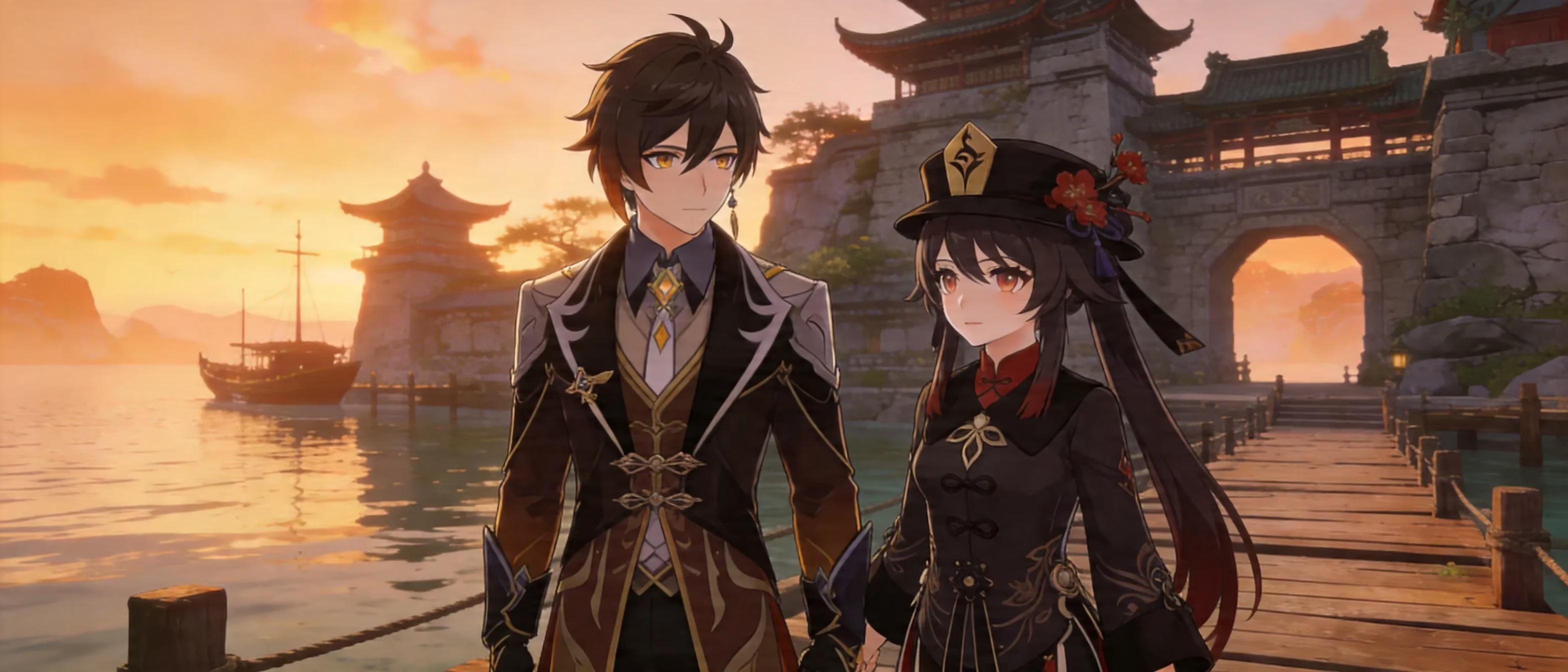
Zhongli (voiced by Peng Bo): His calm, archaic style feels incredibly natural in Mandarin.
-
Hu Tao (voiced by Tao Dian): Her playful and slightly chaotic tone comes across in a very different way in Chinese, with more bounce and mischief in the delivery.
Chinese server choice
If you actually live in mainland China, the CN server is the obvious—and legally appropriate—option. If you live outside China, the safer choice is almost always the global version. For most players in East and Southeast Asia, the Asia server will usually give the best ping, while Europe and the Americas servers are the better fit for their own regions.
If you’re new, pick the server closest to where you physically live. That choice sticks, and you cannot undo it later by moving your progress elsewhere. Account recovery is another factor people don’t think about enough: global accounts go through HoYoverse support, while CN account recovery means dealing with miHoYo’s domestic support system, which is primarily Chinese-language. If you travel a lot or may relocate, it’s smart to test your latency first before locking yourself in.
Is Genshin Impact Chinese: FAQ and Player Takeaways
A few related questions come up all the time when people search is Genshin Impact Chinese, so let’s answer them directly.
Is Genshin Impact made in China?
Yes. The game is developed by miHoYo, whose core development teams are based in Shanghai, even though the company now has a broader international presence.
Is HoYoverse a Chinese company?
HoYoverse, or Cognosphere, is incorporated in Singapore and acts as miHoYo’s international publishing arm. miHoYo itself is a Chinese company and fully owns HoYoverse.
Is Liyue based on China?
Yes, very clearly. Liyue is a fantasy interpretation of Chinese culture, especially coastal trade cities, historical aesthetics, and mythological traditions. Zhongli, its Archon, also carries direct references in both naming and design that connect back to Chinese mythology.
What is the best version for global players?
If you are outside mainland China, the HoYoverse global client is the right choice. It supports international payments, multiple languages, and full access to ongoing content updates. As of 2026, Genshin is still getting major patches roughly every six weeks, with the world of Teyvat continuing to expand toward future arcs like Snezhnaya.
Conclusion
Genshin Impact sits in a pretty unique spot in the industry. It is unmistakably Chinese in origin, clearly shaped by Chinese creative influence, and yet built from the ground up to succeed as a global live-service game. You can see that most directly in miHoYo’s Shanghai roots, in Liyue’s design, in Lantern Rite, and in details like Yun Jin’s opera-inspired presentation.
So if you’re still asking is Genshin Impact Chinese, the answer is simple: yes. It’s a Chinese-developed game that grew into a worldwide hit through strong production values, thoughtful cultural design, and a live-service model that has kept expanding for years. Whether you play on the CN client or the global one, and whether you stick with English voices or switch to Mandarin, you’re still exploring a world that started with a studio vision built in Shanghai. Happy exploring, Travelers.